Tax Lab · Visual lab
The 30% deposit gate
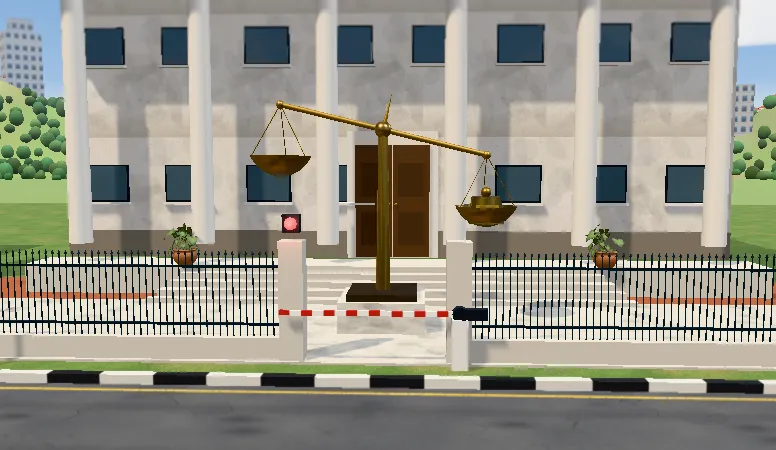
Before the Tribunal will hold off collection, a taxpayer pays to be heard. Put money on the scale, watch the barrier, and find the disputes where the gate opens for free.
Two-minute experiment
With your own figures, press Pay the deposit and watch the scale level and the barrier lift. Then press Accept half, pay 30%: the barrier drops again. Why? Then choose Aggreko, where URA demanded UGX 10.1 billion and the Tribunal said nothing was due.
You have understood it if you can say, before pressing anything, what the deposit is on an assessment of UGX 1 billion when you accept UGX 400 million of it.
The deposit gate
 Building the scene
- 1What is being disputedAn assessment of UGX 1,000,000,000, of which the taxpayer accepts UGX 100,000,000.
- 2The price of the gate30% of UGX 1,000,000,000 is UGX 300,000,000; the undisputed part is smaller, so 30% sets the deposit.
- 3Paying itUGX 0 counted paid; UGX 300,000,000 short.
The gate stays shut. Without the remaining UGX 300,000,000, protection from collection lapses and the application may be dismissed.
Break it on purpose
Your figures
Shown so you can see it does not count.
Counts towards the deposit (Jaala Higenyi, 2026).
The rule
A taxpayer who has lodged a notice of objection to an assessment shall, pending final resolution of the objection, pay 30 percent of the tax assessed or that part of the tax assessed not in dispute, whichever is greater.
- The base is the assessment in dispute. Tax already paid on the taxpayer's own return does not count (Nile Breweries, High Court).
- Not paying lets the protection from collection lapse and can end the application; it is not contempt (same case).
- “Pay” is not cash only: property URA has already seized through distress counts towards the deposit at its verified value, and a shortfall calls for an order to pay the balance, not dismissal (Dr. Jaala Higenyi Alfred v URA, Civil Appeal No. 121 of 2023, [2026] UGCommC 219, High Court, 30 April 2026).
- No assessment, no deposit: a dispute about how URA allocated payments needs none (Aggreko, Tribunal, 2025).
- Disputes that are purely legal or technical are outside the deposit, under the Fuelex exception as the Tribunal applied it.
- Since March 2025 the deposit is paid with a case-specific payment number and ring-fenced (URA notice, as reported by EY).
What the lab does not do
- It does not decide whether your dispute is “purely legal”: the Tribunal does, case by case.
- It does not model perishable goods (s. 15(2)), timing of payment, or what happens to the deposit when URA wins beyond the deposit being kept.
- Section numbers follow the Act as at 2018 and the cases; later revisions may renumber them.
The cases behind it: Nile Breweries, Aggreko, Wananchi, Yogi Steels and Ericsson. The deposit comes before the Tribunal; the deadline to get there is in the objection clock.
Checklist
- Work out the deposit from an assessment and the part you accept
- Explain why tax paid on your return does not reduce it
- Name two kinds of dispute that need no deposit
- Say what happens to the deposit if you win
Sources: Tax Appeals Tribunals Act, Cap. 341, s. 15 (as at 1 July 2018); URA Case Digest Vol. XI; EY Global Tax News, 17 March 2025 and 10 July 2026. The rule as written, not legal advice.