Tax Lab · Visual lab
Export or sale?
The same crates can cross the same border and owe nothing, or 18% VAT plus excise. What decides it is who owns them at the factory gate, who is paid what, and whose name is on the papers.
Two-minute experiment
Choose Nile Breweries and press ▶ Auto. The beer leaves on the buyer's truck and title changes hands at the gate; the bill comes to UGX 18.5 billion. Now choose The same beer, through a genuine agent: same beer, same border, nothing to pay. Which three things changed?
You have understood it if you can say, before pressing anything, what happens to a genuine export when the export documents are lost.
Export or sale
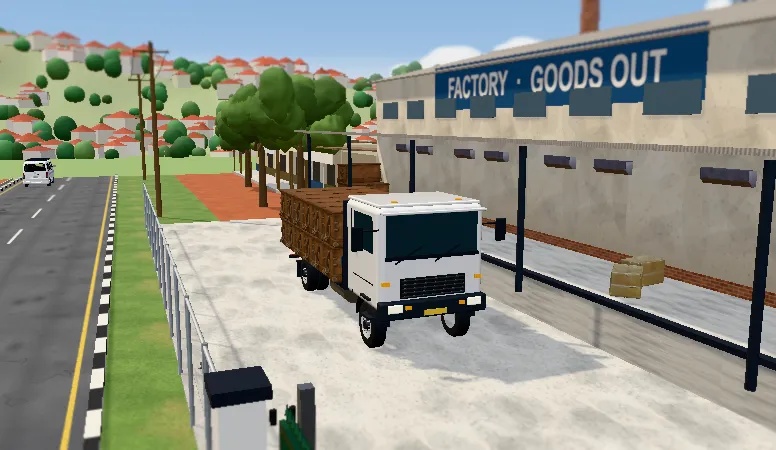 Building the scene
- ✓Where is the supply made?The manufacturer delivers the goods out of Uganda as part of its supply.
- ✓The invoiceA zero-rated export invoice to the foreign customer.
- ✓Proof of exportExport documents in the manufacturer's name, acceptable to the Commissioner General.
- ✓Excise dutyExported by the manufacturer: the Commissioner may remit the duty.
Step 1 of 6: Loaded at the factory. Title held by Manufacturer.
A zero-rated export: no VAT, and excise remitted.
VAT UGX 0 · Excise UGX 0 · Total UGX 0
Every case, the same question: what tax does the manufacturer owe on the load?
Break it on purpose
Set up your own consignment
Is there a Ugandan middleman?
Title and risk pass…
I deliver the goods…
My invoice is…
Export documents in my name?
The rules
- A supply of goods is zero-rated where the goods are exported from Uganda as part of the supply: delivered to, or made available at, an address outside Uganda, proved by documents the Commissioner General accepts (VAT Act Schedule 4, paras. 1(a), 2(a)).
- A supply of goods takes place in Uganda if the goods are delivered or made available in Uganda (s. 15).
- A supply by an agent is a supply by the principal (s. 13), but only a genuine agent: one that does not take title, does not pay a purchase price, earns a commission and acts for the principal (Nile Breweries, 2025).
- The Commissioner may remit excise duty if satisfied the goods have been exported (Excise Duty Act s. 9(4), formerly s. 10(3a)); the Tribunal applied this only where the manufacturer exports.
What the lab assumes
- The Nile figures are worked back from the reported tax: the value is the VAT divided by 18%, and the excise rate is the reported excise over that value.
- The “genuine agent” replay is a counterfactual, not a case: it shows what the Tribunal said the agreements lacked.
- The default excise rate is an example; use your product's. Excise duty is often specific (per litre), which the lab simplifies to a share of value.
- Services follow different rules: see the two Allied Beverages cases, decided opposite ways for different years (2025, 2024).
The case: Nile Breweries v URA, TAT 135 of 2024, upheld in full; the High Court refused to stop collection in 2026.
Checklist
- Name the four signs that a middleman is a buyer, not an agent
- Say where a supply takes place when the buyer collects at the factory gate
- List the papers a manufacturer needs to zero-rate an export
- Explain why excise falls due when the goods leave the factory, whatever the buyer does next
Sources: Value Added Tax Act, Cap. 344 (revised edition), ss. 13, 15 and Schedule 4; Excise Duty Act, Cap. 336, s. 9(4); URA Case Digest Vol. XI (Nile Breweries v URA). The rules as written, not tax advice.